
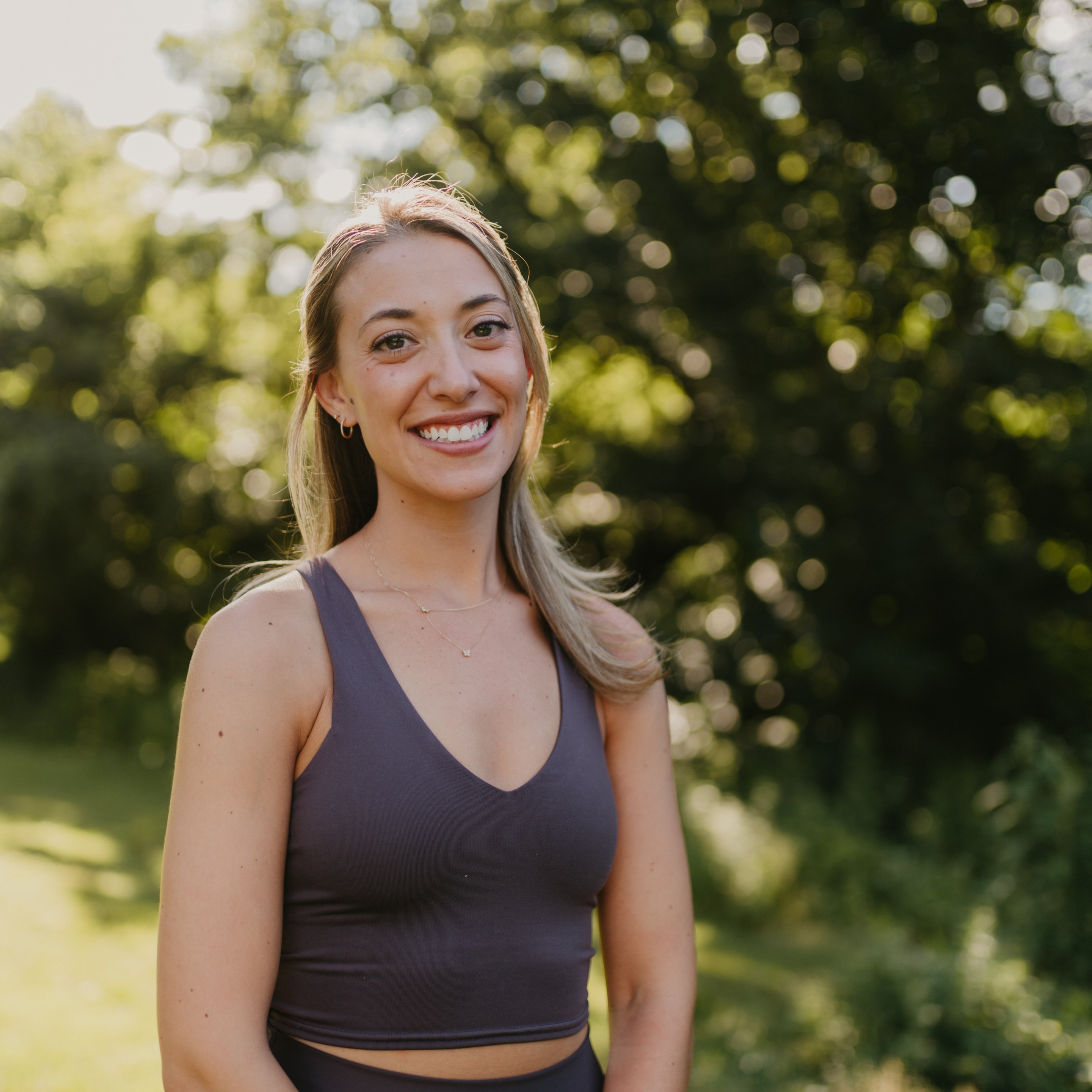
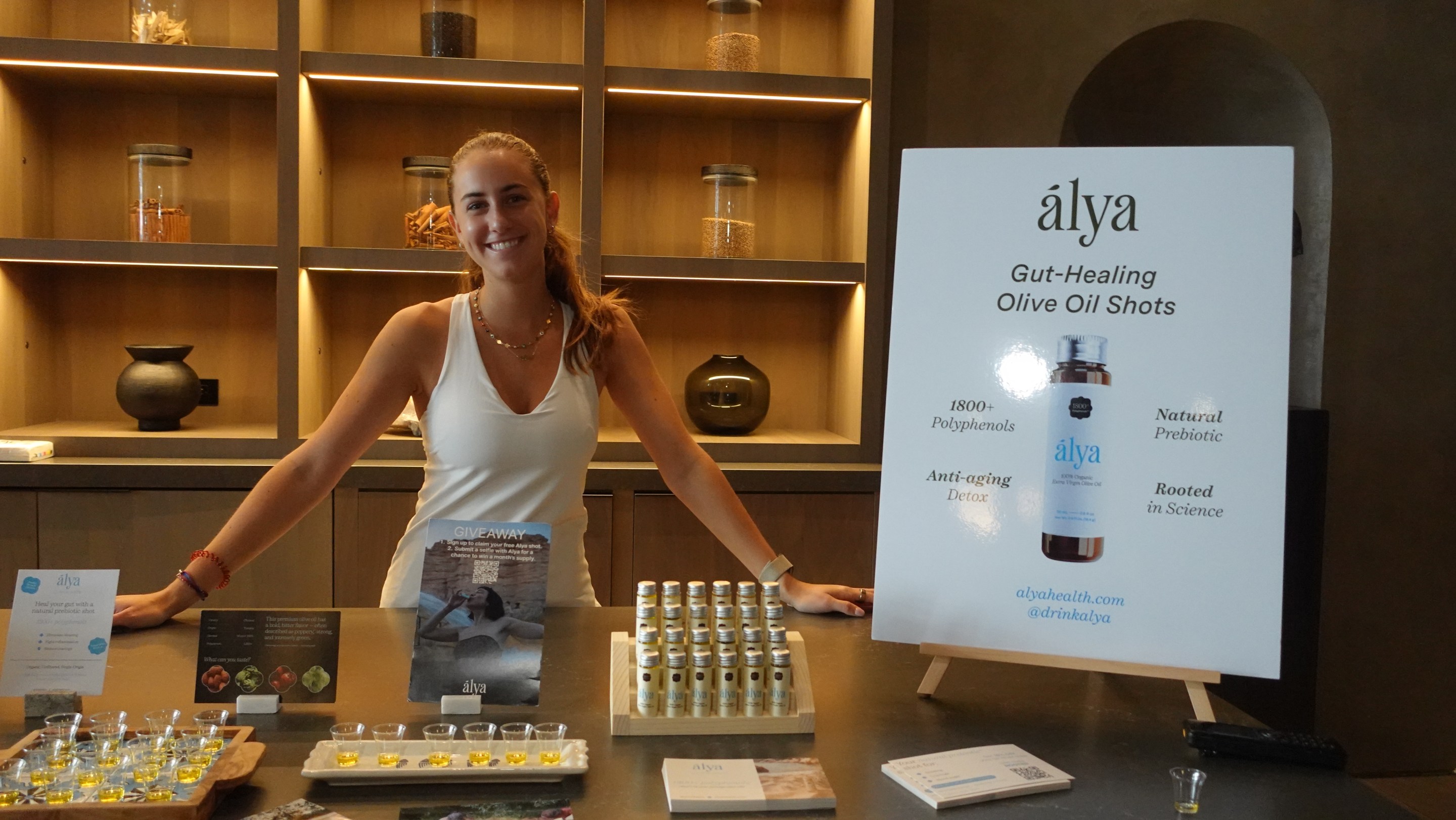
In the heart of Mediterranean living lies a simple but powerful truth: daily rituals shape lasting wellness. For Maya Ayed, founder of Alya, that truth is distilled—literally—into a daily health shot. Crafted to combat bloating, support energy, and nurture whole-body balance, Alya is more than a quick fix. It’s a return to nature’s wisdom, a moment of intentionality in a busy world. Drawing from ingredients rich in antioxidants and tradition, Maya’s approach reflects a lifestyle deeply aligned with the rhythms of the body and the earth.
Ayed spoke with Appetito about the inspiration behind Alya Health and how a daily olive oil ritual became a wellness business.
What inspired you to create Alya, and how has your personal wellness journey shaped its formulation and mission?
In Tunisia, where I’m from, I grew up visiting my family’s olive groves every weekend. I’d watch my grandfather drink a tablespoon of our olive oil each morning. During Covid I fondly remember a visit to our olive estate with my grandfather. A year later, he called and said he wanted to sell it, and that he didn't have the time to care for it anymore. My body tightened when I heard. I worried I’d lose a sense of my identity - a unique resource and tradition that had been anchors for my family and my upbringing.
At the same time, I found myself struggling with gut issues while still trying to adapt to life in California, where I had moved for undergrad. I experienced constant bloating, fatigue, hormonal acne, and nothing I tried seemed to work. I reflected on life back at home by the groves, and I started to take a tablespoon of our family’s single variety, cold pressed, organic early‐harvest olive oil daily. My digestion, energy, and skin began improving in two weeks. Alya Health was born from this intersection: a commitment to continuing generations-long stewardship of our family olive groves, and introducing a simple, everyday ritual that could help heal others too.
The mission is one our ancestors always knew, that the right food is medicine.
Want more wellness rooted in Italian and Mediterranean traditions? Explore more of Appetito’s wellness coverage.
The Mediterranean lifestyle places a strong emphasis on digestive health, natural energy, and whole-body nourishment. How do Alya’s ingredients reflect this heritage?
I grew up in a culture where olive oil was used the way people here use water. It’s on every table, in every meal, and often taken straight by the spoon. Our ingredient list could not be simpler: single‐origin, early‐harvest Chetoui olives that are cold‐pressed, organic, and extra virgin.
The Chetoui variety, grown on a hillside under environmental stress with natural irrigation from the rain, organically concentrates polyphenols from the harsh environmental conditions. It’s how each shot delivers between seven to fifteen times more antioxidants than the industry standard, provides healthy fats that support digestion, balances energy and blood sugar, and overall increases gut health by replenishing it with good bacteria.
Our olive oil reflects the natural environment of Tunisia: born of the sun, sea, and local climate conditions.
Want to be the first to know about Italian food events, restaurant openings and culinary travel? Subscribe to the Appetito weekly newsletter.
Bloating is something many people struggle with quietly. How do you approach wellness in a way that feels empowering, rather than restrictive or overly clinical?
I think about bloating and digestion less as “symptoms to fix” and more as signals that my body is trying to tell me something, that maybe it’s not getting the right inputs it needs to thrive. When we give our cells the nutrients and information they actually need, our energy, mood, and digestion usually fall into place naturally. When people shift their mental model and understand that their body isn’t broken, but just responding to the inputs it’s receiving, wellness becomes less about punishment and restriction, and more about exploration and expansiveness, giving yourself what you actually need.
When I moved to the US, bloating became my new normal. I started feeling uncomfortable in my own body, a sensation many women can identify with and feel helpless in knowing how to heal. I tried more than 20 supplements, numerous protocols, and nothing worked. When I rediscovered the healing nature of the olive oil I grew up with, my approach became focusing on adding one simple and supportive ritual, rather than joining the typical norm of picking my body apart and putting a life of restriction on a pedestal.
A single, bioactive shot of a food seven to fifteen times richer than industry standards that your body recognizes is gentler and integrates better than any pill, supplement, or complicated protocol. It’s much less about fixing yourself and more about finding a new input sourced from the highest quality that will work in tandem with your body, supporting it to function the way it evolved to.
There’s a ritualistic element to taking a daily shot. What do you hope this moment means for someone’s day?
I think of the daily shot as a pause, a ritual where you choose yourself. It’s a minute of intentionality that can anchor the rest of your day, almost like brushing your teeth but for your gut and long‐term health. We recommend you take the shot about 30 minutes before your first meal. It’s also a reminder to stop and think about the food you’re about to eat, how it will nourish you, and how our olive oil will complement it in the guy. I want that moment to feel grounding: a reminder that caring for yourself doesn’t have to be elaborate, just consistent, and grounded in the wisdom of our earth.
Do you see Alya as a bridge between science and tradition? What kind of research or ancestral wisdom guided your process?
Alya Health is where ancient medicine meets modern health, and it’s our goal to bridge that gap. My family has taken a tablespoon of olive oil every morning for generations. My great‐grandfather lived to 109 and we always attributed his longevity to our olive oil. There’s a reason we drizzle it on all our foods, and why it remains a staple at every table. There are over a thousand studies on extra virgin olive oil, specifically those with high phenolic content, showing benefits for gut health, metabolic health, inflammation, and GLP‐1 production and satiety. We send our olive oil to the World Olive Center in Athens, Greece, to verify that our polyphenol levels are the highest on the market.
What’s your own morning or evening wellness ritual like, and how does Alya fit into it?
My morning ritual begins with a 30 minute meditation that I practice in an online group. Then I go to the gym, and after I take a shot of the olive oil about 30 minutes before my first meal. This morning routine has been my anchor for a while. I like to keep it simple but consistent. Clear actions that move the needle for my gut, hormones, and energy. Alya Health fits in as the non‐negotiable: even if the rest of the day goes off the rails, that one ritual is my constant.
Looking forward, how do you envision Alya evolving or being part of a broader wellness culture?
When I founded Alya Health, I knew the biggest obstacle I’d face in the US would be bridging the gap that a shot of high phenolic olive oil would be as beneficial, if not more, than most dietary supplements. I think in the U.S. it has become standard to simply not know, or not learn, that there was a time that food was the original medicine. Afterall, olive oil is in how many of our foods? If many of us are microdosing it, why don’t we feel any better? A fair and reasonable question.
Bringing Alya Health to market also requires the responsibility to educate, to share information about our food systems, our biology, and how nutrition fits into both: that includes talking about how the gut works, what polyphenols are, what oxidative stress is, how the terrain in Tunisia matters, and how the soil in the US lacks a diverse microbiome which affects the bioavailability of nutrition in the food we harvest.
It is our goal to make olive oil shots feel as normal as taking a supplement, and for Alya Health to be the brand people trust for polyphenols. Longer term, I see Alya Health as part of a broader “food as medicine” culture: products that are as convenient as supplements but grounded in real, potent nutrition and clear sourcing. I’d love for us to own the polyphenol category and keep building rituals and education that make nourishing choices feel accessible and intuitive.