

In Italian, food is rarely just food. It organizes time, relationships, and expectations. This column explores Italian sayings and proverbs as ways of thinking shaped at the table.
These expressions preserve that knowledge in compact form. Read literally, they speak about eating. Read more closely, they offer insight into how experience, pleasure, and social life are understood.
The aim is simple: to treat language as another ingredient—handled with care, tasted slowly, and shared. No prior appetite required. It tends to arrive along the way.
Che Pizza!
Literal translation: What a pizza!
Meaning: How boring! What a bore!
Few foods enjoy pizza’s global reputation.
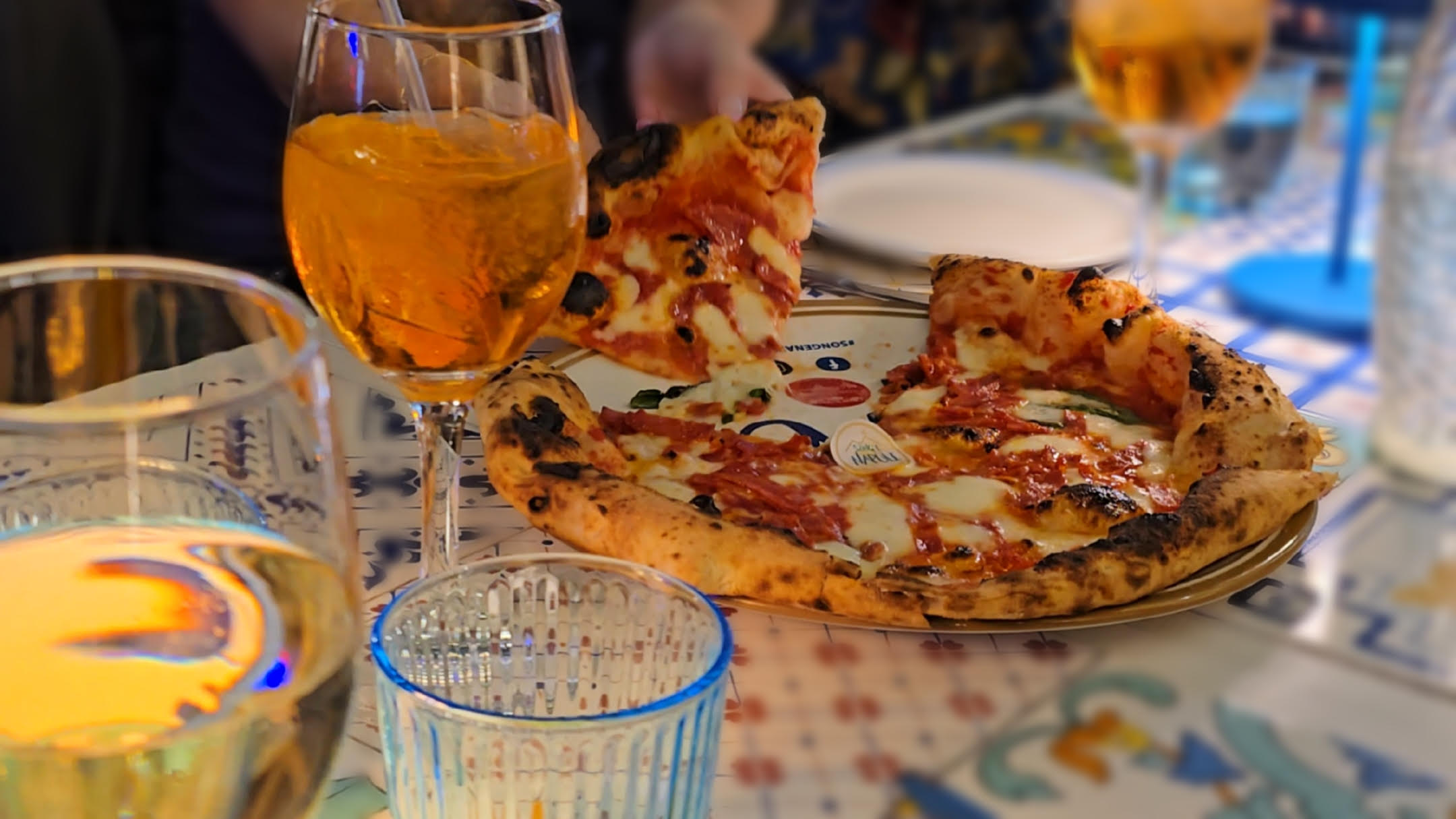
Born in Naples and now found virtually everywhere, pizza has become one of Italy’s most recognizable cultural exports. Whether in New York, Tokyo, Buenos Aires, or Sydney, it is celebrated, imitated, debated, and loved. Its prestige is such that UNESCO has recognized the art of the Neapolitan pizzaiuolo as part of the Intangible Cultural Heritage of Humanity. Italians themselves take enormous pride in it.
Which makes what follows all the more surprising.
When something becomes tedious, repetitive, or simply hard to sit through, Italians may sigh: che pizza!
The target can be almost anything. A meeting that should have ended twenty minutes ago. A television series that keeps going long after its best ideas have run out. A conversation trapped in an endless loop. It can even be a person: someone who complains too much, repeats the same stories, or drains the energy from a room. In that case, the label is una pizza—in other words, a bore.
By the twentieth century, the expression was clearly in common use. Even Eugenio Montale, Italy’s most important twentieth-century poet and later a Nobel Prize winner, used it without explanation. Reviewing Gustave Charpentier’s opera Louise, he referred to the charge that it was a pizza sonnifera—literally a “sleep-inducing pizza.”
But how did one of Italy’s most beloved foods become associated with boredom?
Several explanations have been proposed. Some point to the long waiting times required for dough to rise. Others point to the flat, uniform appearance of the pizza itself. Still others look beyond the kitchen altogether. In the world of cinema, the round metal containers that once held film reels were also called pizze, leading some to speculate that the expression originated with particularly long or monotonous films.
Perhaps. Perhaps not.
What is certain is that modern Italians do not think about film canisters or fermentation times when they use the phrase. They think about pizza—the food itself. That is precisely what makes the expression so striking. Even if the saying did originate elsewhere, it survives today because speakers instinctively connect it to the dish they know and love.
The expression reveals something characteristic about Italian culture: a willingness to play irreverently with its most cherished symbols. No food is too prestigious, too beloved, or too iconic to be recruited into everyday language. In Italy, culinary pride and culinary humor often coexist quite comfortably.
Pizza may be Italy’s most successful culinary ambassador. Yet when a lecture drags, a television series loses momentum, or a dinner guest launches into the same story for the fifth time, Italians have no hesitation in turning that symbol of pleasure into a complaint.
Che pizza!
Hungry for Italian food idioms? Discover more of Samuel Ghelli's articles.
Fare la Scarpetta: The Last Sweep of the Plate
Finire a Tarallucci e Vino: When the Table Has the Final Word