

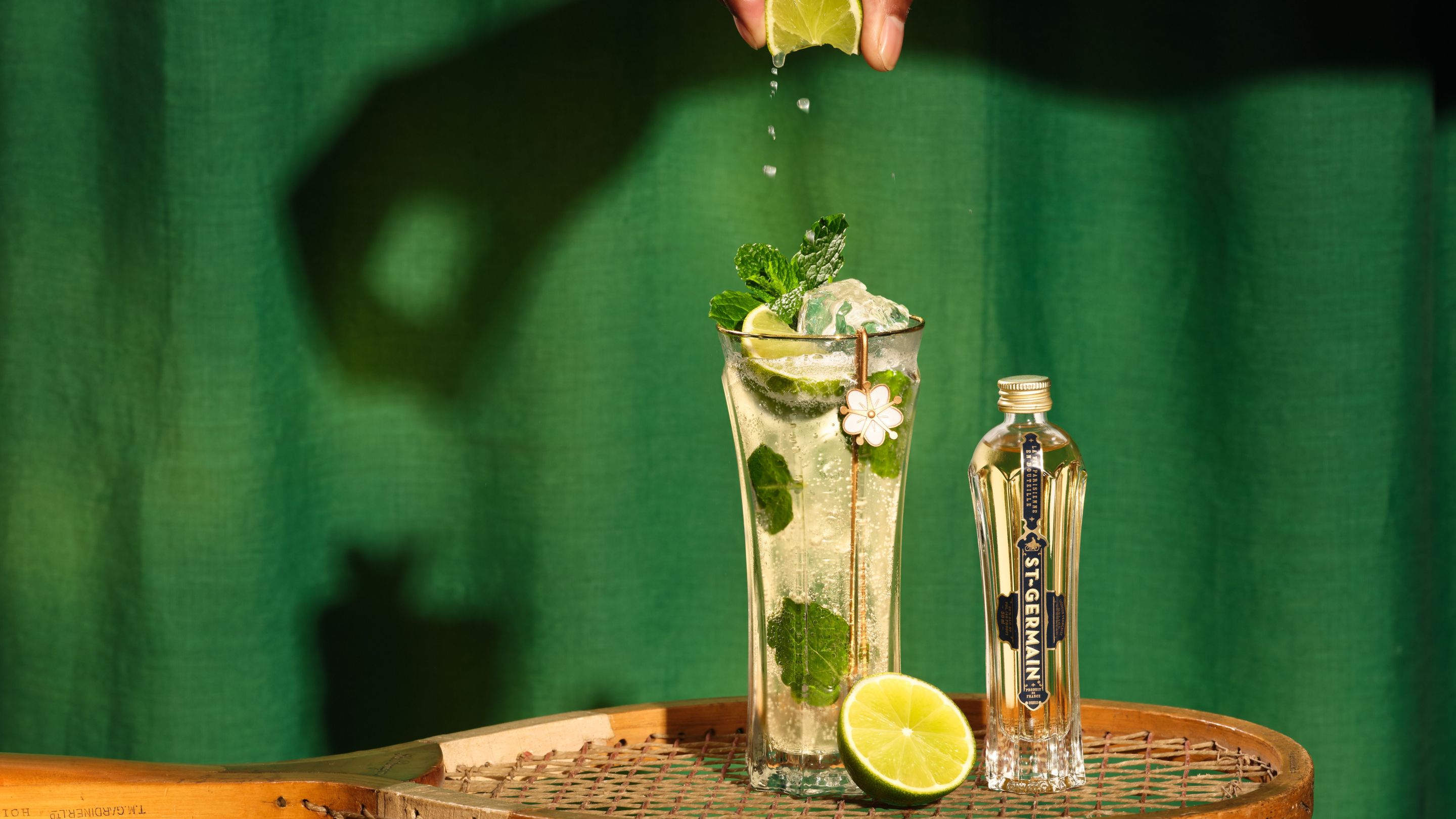
The Hugo Spritz continues to be one of the most popular drinks of summer, holding onto the momentum it has built over the past several years. Pale, bubbly and finished with fresh mint and lime, it has moved from European aperitivo tables onto cocktail menus across the U.S.
Its rise has been particularly sharp. Google searches for the Hugo Spritz are up 66% in the U.S., while appearances on cocktail menus have increased 88%. Its popularity continues as American drinkers continue to gravitate toward lighter, refreshing cocktails.
So what turned the Hugo into such a hit, and where does St-Germain fit into the story? Appetito spoke with Julian Arreola, U.S. National Ambassador for St-Germain, about the cocktail’s evolution and why American drinkers can’t seem to get enough of it.
How did St-Germain become part of the modern Hugo Spritz recipe?
The rise of the Hugo goes hand in hand with the introduction of St-Germain. When Roland Gruber created it in South Tyrol in 2005, the original recipe featured lemon balm syrup. As the cocktail gained momentum throughout the region, elderflower cordial became the natural next step, preserving that citrusy brightness while adding layers of pear, lychee, and honeysuckle.
What makes the Hugo Spritz different from other popular Italian spritzes?
Most Italian spritzes we know lean into bitterness. The Hugo moves a little differently, leading with freshness. From the first sip, you get soft citrus and delicate floral notes, while mint and lime bring a beautiful, cooling green lift that draws St-Germain’s tropical character forward. It still has the effervescence and easy-drinking character of a classic spritz, but the experience is more fruit forward, vibrant and refreshing than bittersweet.
Why do you think the Hugo Spritz has become so popular in the U.S.?
It sits right at the intersection of what people want to drink now: something lighter, fresher and easy to enjoy, but still distinctive. The ingredients are recognizable; the cocktail is simple enough to recreate at home, and it feels elevated without being intimidating. It also has undeniable visual appeal. It delivers a little European escapism in a wine glass, which I think people are seeking right now.
How does the Hugo Spritz fit into the Italian tradition of aperitivo?
Aperitivo is really a community-centric ritual rather than one specific style of drink. It’s about slowing down, opening the appetite through a beverage and welcoming the transition between the day and evening. The Hugo fits naturally into that tradition because it is bright, effervescent and designed to be enjoyed slowly alongside food and good company. It’s a cocktail that invites you to settle in, connect, and stay for a while.
Love discovering Italy one bite at a time? Subscribe to the free Appetito newsletter for the latest in food, travel, recipes, and Italian culture stories.