

In Italian, food is rarely just food. It organizes time, relationships, and expectations. This column explores Italian sayings and proverbs as ways of thinking shaped at the table.
These expressions preserve that knowledge in compact form. Read literally, they speak about eating. Read more closely, they offer insight into how experience, pleasure, and social life are understood.
The aim is simple: to treat language as another ingredient—handled with care, tasted slowly, and shared. No prior appetite required. It tends to arrive along the way.
Mangiare in testa a qualcuno
Literal translation: "To eat on someone’s head."
Meaning: To surpass someone decisively in ability, skill or another quality.
Imagine someone eating on another person’s head. The arrangement would be awkward, the service questionable, and the person underneath entitled to complain. It is a bizarre, faintly grotesque scene, difficult to explain and even harder to recommend. Perhaps it has never actually happened. Yet Italian has found a perfectly good use for it.
Mangiare in testa a qualcuno means to be so much better than another person that the difference leaves little room for discussion. Someone else might well be competent, experienced, or even quite pleased with themselves. You are still comfortably above them. A comparison hardly seems worth making.
What makes the expression memorable is its refusal to leave comparison abstract. Ability becomes height, height becomes a dining opportunity, and another person’s limitations become part of the furniture. The boast is extravagant enough to carry a touch of comedy, though the person underneath may find it less amusing.
English offers “to be head and shoulders above someone” and stops there. Italian sets the table and stays for lunch.
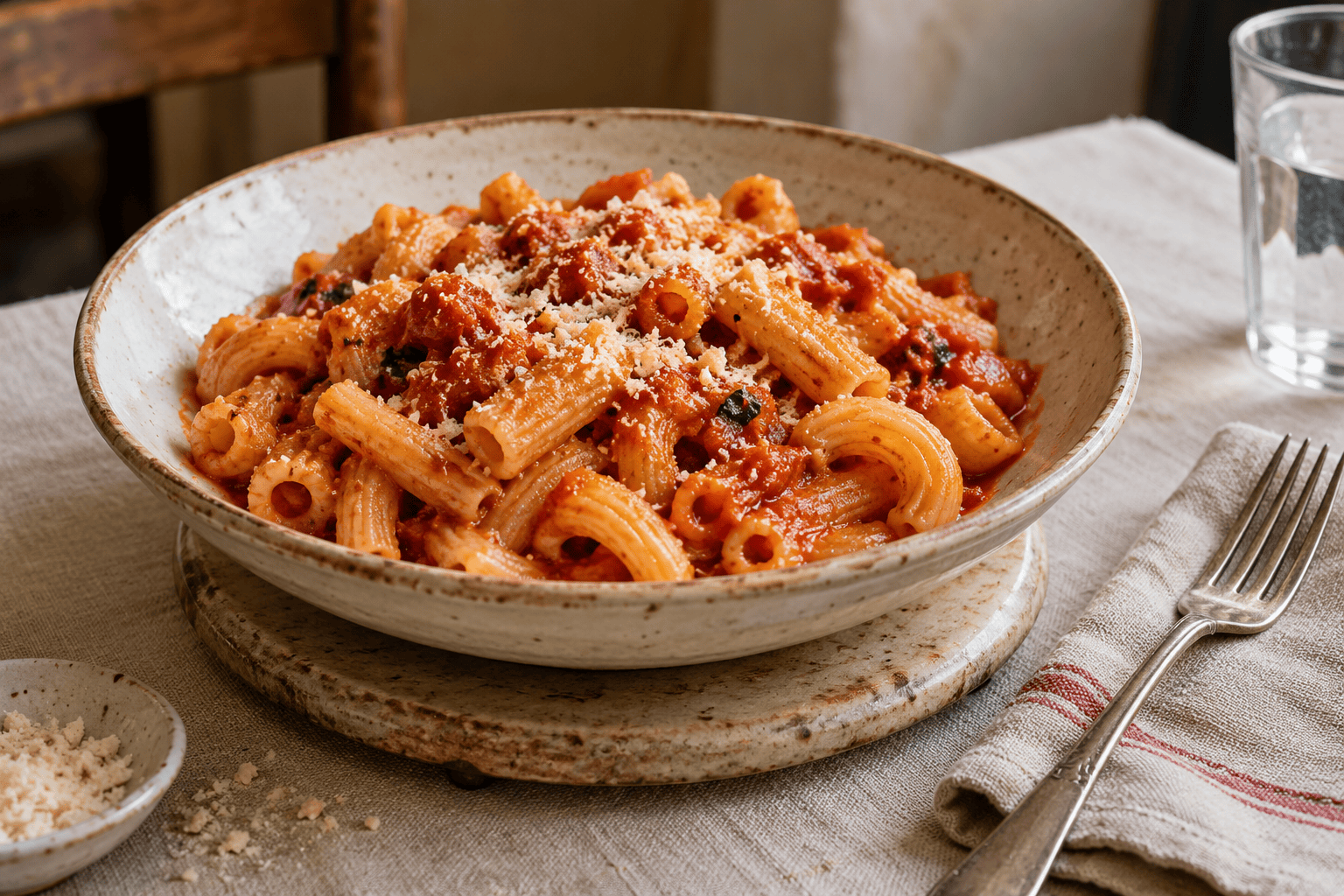
But what is on the menu? The shorter expression leaves that question open, while longer versions specify what is served. In Sicily, it is maccheroni—macaroni. In Tuscany, pappa, a soft food or pap. In Venice, bigoli, thick strands of pasta. Other versions offer torta, cake.
The menu changes without disturbing the seating arrangement. The important thing is where the meal takes place and who has been reduced to supporting it.
Italian has other ways of conveying much the same idea, but none has the force and vividness of the culinary expression—which, to stay on theme, eats pappa, or whatever else takes your fancy, on the heads of all the others.
Most competitive encounters end with someone ahead and someone behind. Here, the winner also gets fed.
If someone tells you that another person ti mangia in testa, therefore, do not reach for a napkin. There is no lunch to attend. Your abilities have just been assessed, and the verdict comes with table service.
Love discovering Italy one bite at a time? Subscribe to the free Appetito newsletter for the latest in Italian food, travel and favorite recipes.