

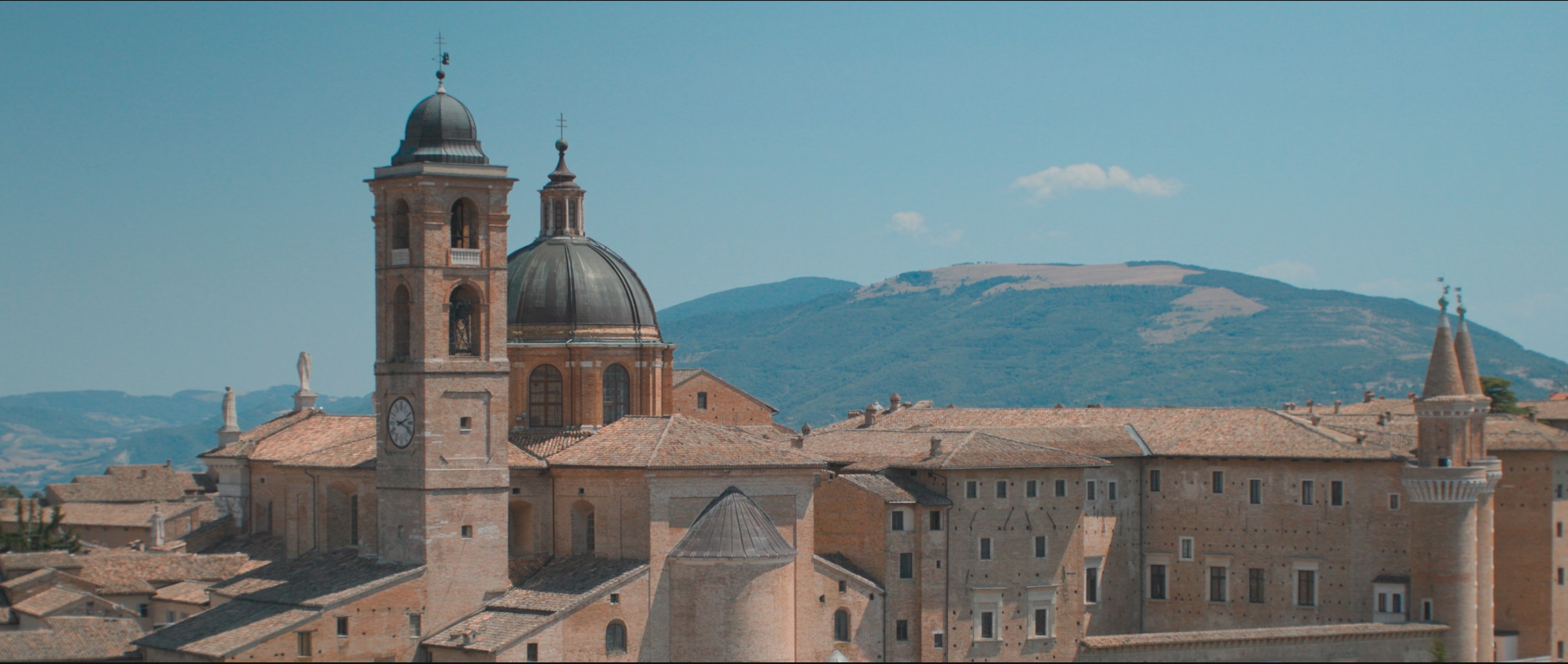
Stanley Tucci begins Episode 3 of Tucci in Italy high above the Renaissance city of Urbino, looking out across a landscape of rolling hills, medieval towns and the Adriatic. It's the perfect introduction to a region that hasn’t become overwhelmed by international tourists (yet).
Tucci travels from bustling piazzas and neighborhood cafés to seaside trattorias and family kitchens, discovering a culinary culture different from that of any other region. Each stop reveals traditions that have been passed down from one generation to the next, including spectacular recipes and even a few Michelin stars. Welcome to Le Marche.
Ascoli Piceno and the olive ascolane
Tucci's first stop is Ascoli Piceno, where the passeggiata takes center stage. Locals gather over an aperitivo, taking in the slow life only Italians can really appreciate. Here he meets the Migliori family, whose painstakingly handcrafted olive ascolane have become one of the city's defining specialties.
Watching the process explains why these stuffed olives were once reserved for weddings and major celebrations. Each large local olive is carefully peeled into one continuous spiral, preserving as much flesh as possible before being wrapped back around a filling of pork, beef, Parmigiano Reggiano, nutmeg and egg. Breaded and fried until crisp, they become an easy to eat street food.
Today, the Migliori family has helped transform olive ascolane into one of Italy's iconic street foods while honoring the tradition that made them famous. Tucci happily declares that five of them could make a meal.
Love discovering Italy one bite at a time? Subscribe to the free Appetito newsletter for the latest in food, travel, recipes, and Italian culture stories.
Make it at home - Appetito's favorite olive recipes:
Sicilian Summer Salsa Topper for Ferragosto and Grilling
Stuffed Calamari Recipe with Black Olive Ratatouille
Local traditions and Caffè Meletti
Just around the corner, Tucci steps inside the historic Caffè Meletti, where another local tradition has remained largely unchanged for more than 150 years. Beneath ornate Liberty-style frescoes, he samples Anisetta Meletti, the sweet anise liqueur first distilled here in 1870 by Silvio Meletti.
Served alongside three espresso beans, the cocktail is refreshing, and Tucci is excited to try a second, more dryer option. The beans are eaten afterward, a small tradition said to bring good luck while subtly changing the flavor of the liqueur.
Make it at home - Appetito's favorite cocktails:
Coco Caffè is the Frozen Espresso Cocktail of the Summer
Table Ten at TUCCI for a Nostalgic Negroni
History layered into pasta
Tucci heads inland to Macerata, where the architecture and the cuisine change quickly. Once home to noble families who invested heavily in theaters, opera and the arts, the town is also famous for one of Le Marche's most celebrated dishes.
At Ristorante Osteria dei Fiori, chef Iginia Carducci prepares vincisgrassi, a baked pasta often compared to lasagna. Her version features seven delicate layers of pasta separated by a rich ragù made with a combination of meats and offal.
The recipe reflects the region's agricultural history, blending local ingredients into a dish that has become a symbol of Le Marche. In 2022, Vincisgrassi alla maceratese earned STG (Traditional Speciality Guaranteed) status from the European Union, recognizing generations of culinary tradition. At Osteria dei Fiori, the Carducci family continues that legacy, with Iginia in the kitchen, her daughter Letizia welcoming guests and her son Paolo overseeing the wine.
Make it at home - Appetito's favorite lasagne recipes:
A Family Lasagna Recipe from a Legendary Brooklyn Restaurant
Cacio e Pepe Lasagna: A Via Carota Classic
The sea tells the story
Back along the Adriatic coast, the focus shifts to moscioli, the prized wild mussels that grow naturally along the rocky Conero coast between Ancona and Sirolo. Harvested by hand by divers, they're among Italy's rarest shellfish and remain deeply tied to the region.
At Ristorante Emilia in Portonovo, Tucci meets Federica Rubini, whose grandmother Emilia opened the restaurant after World War II. Here, spaghettini con i moscioli has wild mussels in a simple tomato sauce. Garlic is left out because, as Emilia believed, it would overpower the taste of the shellfish.
For Federica, her grandmother's legacy is important. Emilia believed cooking was about making people happy, a philosophy that continues at the restaurant generations later and one Tucci seems to appreciate just as much as the delicious meal.
Make it at home - Appetito's favorite mussel recipes:
Mussel, Potato, and Rice Gratin
Honoring tradition through innovation
Farther north in Senigallia, Tucci visits Uliassi, the three-Michelin-starred restaurant founded by siblings Mauro and Catia Uliassi. What began as a modest beach hut has evolved into one of the world's most celebrated restaurants.
Their signature ossobuco combines veal, cod tripe, clam water and herbs into a dish inspired by the Adriatic. Behind every plate is months of work inside the restaurant's dedicated laboratory, where the team develops new ideas during the off-season. Tucci marvels at the complexity of the dish and comments about the satisfaction of creating something that brings people so much joy.
Make it at home - Appetito's favorite Italian comfort-food recipes:
Hearty Italian Spezzatino for Family Dinner
Olympic-Inspired Ossobuco alla Milanese by Chef Matthew Cutolo
Carrying traditions forward
The final culinary stop brings Tucci to Campofilone, home of the famously delicate Maccheroncini di Campofilone IGP. At the Spinosi family workshop, he watches pasta made much the same way it has been for generations using only flour, fresh eggs and experience.
The dough is exceptionally rich, made with ten eggs for every kilogram of flour before being rolled almost impossibly thin. Although production has expanded around the world, much of the work is still completed by hand (including cracking thousands of eggs), preserving techniques that began as a practical way for local families to stretch simple ingredients into nourishing meals.
The visit ends at the Spinosi family home, where Tucci joins the family for a meal overlooking the rolling countryside. With plates of maccheroncini on the table and the hills of Le Marche stretching into the distance, Tucci enjoys this intimate moment.
Make it at home - Appetito’s favorite pasta recipes:
Pasta School with Lowcountry Bella: The Heart of Fresh Pasta
How to Make Grano Duro Pasta Dough
A different kind of tradition
The episode closes at the Convento di Montefiorentino, where Fra Pierluigi has helped transform the historic monastery and its surrounding land into an animal sanctuary and food cooperative. Everything from olive oil and wine to flour and baked goods is produced on site, while the work provides jobs and opportunities for people in need.
It is the perfect place to end Tucci’s journey through Le Marche. Here, food is about a way to support a community and give new purpose to land that might otherwise have been left behind.
Can’t get enough of Stanley Tucci? Catch up on all of Appetito’s Tucci in Italy Season 2 recaps.
Tucci in Italy Season 2 Recap – Sicily’s History, Culture and Recipes
Tucci in Italy Season 2 Recap: Campania’s Resilience